Why a Television Can Change the Feel of a Room
Why a television can change the feel of a room: adjust its position, nearby objects and seating direction to make viewing fit everyday household life.
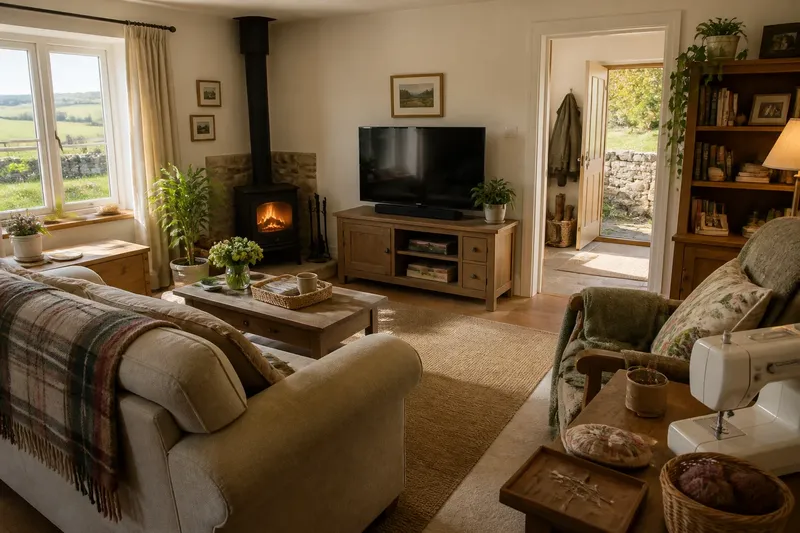
Why a television can change the feel of a room becomes clear when everyone turns towards it, even when nobody has chosen to watch. A screen can quietly redirect conversation, block a useful route or make a comfortable room feel arranged around one activity. The fix is often not a new television: it is a better relationship between the screen, the furniture and the other things people do there.
When the screen takes over
Problem: The room feels like a viewing space even when the television is off. This often happens when the screen is the most prominent object on the main wall and every seat faces it directly.
Try: Keep the television where it can be seen, but give another feature equal visual weight. A bookcase, window, stove, large table or piece of artwork can provide a second point of interest. If the room has a fireplace, avoid placing the screen so high that everyone has to look up simply to keep both features in view.
Use the furniture as a clue. A sofa aimed squarely at the screen signals that watching is the room’s default; turning it slightly towards a window or table makes other activities easier to begin. A small change in angle can make a room feel less like rows of seats without making the screen unusable.
When seats face the wrong way
Problem: People crane their necks, shift cushions or move chairs whenever they watch. The usual cause is that the television was positioned around a wall socket or cabinet rather than the direction people naturally sit.
Try: Sit in the seats used most often and notice whether the screen is comfortably visible without twisting. Then consider whether the furniture can turn towards it, or whether the television can move to a wall that suits the seating better. A swivel stand may help when people use the room from more than one area.
Do not assume every chair needs a direct view. In a multi-purpose room, one or two seats can face the screen while others remain oriented towards conversation, a window or a work surface. That arrangement lets someone choose whether to watch without making every activity compete for the same direction.
When movement feels awkward
Problem: Someone has to pass in front of the screen to reach the door, wood basket, kitchen or favourite chair. This is especially noticeable in rooms where the television sits on the only clear route through the space.
Try: Trace the ordinary paths people take, from the entrance to seating, between a table and the kitchen, or from a chair to a shelf. Shift a chair or side table first; if the route remains awkward, consider a different screen position. Keep cables and stands out of walkways, and do not create a new obstruction while solving the old one.
In a rural home, the room may also serve as a place to remove muddy boots, sort post or bring in firewood. Treat those routines as part of the layout, not as interruptions to a perfect television arrangement. A clear route can matter more than giving every seat the same view.
When the picture competes with daylight
Problem: Reflections from a window or bright lamp make the picture hard to see, so people close curtains or rearrange the room. Glare tends to follow the direction of the light, and a screen opposite a large window can catch a bright reflection.
Try: Check the screen at the times the room is usually used. Move a floor lamp, adjust a blind or test a modest change in screen angle before committing to a larger rearrangement. A matte screen position away from direct window reflections may be more comfortable than a brighter setting that dominates the room.
Keep daylight useful for other activities. If the only way to watch is to darken a room that people also use for reading or household tasks, the screen’s position may be the issue. A side wall can sometimes reduce reflections while preserving the window as a natural focal point.
When nearby objects look cluttered
Problem: The television area collects remote controls, chargers, set-top boxes, ornaments and household odds and ends. The screen then seems to take over not only through its size, but because the objects around it make one crowded, conspicuous cluster.
Try: Keep the items needed for watching together, but give them a defined home. A shallow basket or drawer can hold remotes and headphones; a shelf can keep a receiver or games console accessible without spreading small objects across the whole cabinet. Leave some clear space around the screen so the eye can rest.
Be selective with decoration. A few meaningful objects can connect the television to the room, while a line of ornaments beneath it may draw attention back to the screen wall. Avoid stacking objects where they hide ventilation openings, block controls or make cables difficult to reach.
When a television feels out of place
Problem: The screen looks like an afterthought, although its location is practical. It may sit on a temporary table, loom over a narrow cabinet or clash with the way the household uses the room.
Try: Start with what the room needs rather than chasing a showroom arrangement. A sturdy cabinet can give the television a settled place and provide storage for household items; a wall-mounted screen may free floor space, but should not be fixed without considering the wall and the appropriate fitting. Where the right choice depends on product labels, manufacturer instructions or local rules, follow those requirements and ask a qualified installer if needed.
Say you use a sitting room for evening programmes, sewing and talking with neighbours who drop by. If the screen sits on the wall opposite the doorway, imagine turning the sofa a little towards the hearth and moving a lamp beside the sewing chair. The expected result is a seat that still has a view, a clearer entrance and a more inviting place to talk when the television is off.
Which change should you try first?
Should the television face the main sofa?
It should be visible from the seats used for watching, but that does not mean every seat or piece of furniture must face it. If the sofa’s angle makes conversation awkward, try a slight turn before moving the screen.
Is a corner position a good idea?
A corner can preserve wall space and serve seating on more than one side, but it may make the screen awkward to view from the main seat. Check the sightline from where people actually sit, and make sure the cabinet does not narrow a route.
Should the television be hidden when it is off?
Only if concealing it suits the household and does not create extra clutter or an awkward viewing position. A simple cabinet door or a less prominent wall may be enough; hiding the screen is not the only way to restore the room’s other uses.
How can a shared room work for watchers and non-watchers?
Give the screen a clear view from some seats and preserve another comfortable direction for reading, conversation or looking outdoors. A chair angled away from the screen can make opting out feel like a normal choice rather than leaving the room.
Make one change at a time
Before shifting heavy furniture, note where the television is visible, where daylight falls and which routes people use. Try a small adjustment, then spend an ordinary evening using the room as usual. If the new arrangement improves the view but makes conversation or movement harder, keep the useful part and change something else.
The best position is not necessarily the one that makes the television disappear or commands the clearest wall. It is the one that lets the screen serve the household without quietly deciding where everyone sits, walks and looks. That is the practical test behind why a television can change the feel of a room: the room should still make sense when nobody is watching.